Golfers Have a Love Hate Relationship With The Scorecard

scorecardGolfers have a love hate relationship with the scorecard, don’t you think? The scorecard is your guide to the round. Sometimes, if we’re not scoring that day, it’s simply the map to the next hole. If we do take the pencil to it, it feels like it’s a report card; marked up, never erased and NEVER left on the golf cart by mistake!
The scorecard doesn’t have to cause a spike in the heart rate and rapid breathing. It is there as a guide, a place to write the names of your friends and to see your improvement as you play. The scorecard can be your friend in many ways. Here are a few strategies to make the scorecard work FOR you and not seemingly against you.

The first strategy is to decide why you’re out there playing in the first place.  Sometimes we golf for the pure social aspect of the game. We’re meeting friends we haven’t seen in a while, plan to chat and catch up while we play and just enjoy being outside on a beautiful day. If this is the scenario for you when you head out to the tee, then reframe your expectations on scoring. Yes, we all want to play well, make good shots, drain long putts (and short ones too!) and perform to the best of our ability. However, when we are less focused on the game of golf and all it encompasses and are more focused on the social component, then you have to be realistic with your scoring expectations.

If you’ve decided that today is the day you are going to do the absolute best to score as low as you can, than the second strategy is something you might want to try.  During my Futures Tour days, I worked with Annette Thompson, coach/sports psychologist. She shared this fantastic piece of scoring strategy with me and I’ve spread the word ever since. It’s a great way to keep things balanced. Break up your one round of 18 holes into 6 rounds consisting of 3 holes each. Draw heavy lines to mark where each round ends and the new rounds start.  After your first round (holes 1-3) you’re on to the next round. You are either going to build on a good round and continue the momentum or if your first round wasn’t the best, you get to start fresh on round number two. In the end, by turning one round of eighteen holes into six rounds of three holes each, the pressure to score on all 18 holes gets diminished and your potential for success builds.

Finally, the third strategy is from the world of the touring professional. Tour players want the ball to go in the hole in the fewest strokes possible. They play their very best every time they tee it up and they don’t try to fix their swing during the round, they just play. If a ball hits a tree because of an overzealous fade and bounces to the middle of the fairway, they go to it and hit their next shot. If they’ve been hitting a bigger than normal fade that day, they play that shot shape to the best of their ability during the round and head to the range after the round to work it out.  Remember, you’re playing the game of golf, not golf swing, so while you’re on the course, focus on the whole game. You can work out the swing issues on the range when the round is complete.Tour players know better than anyone that a ball in the fairway, even after hitting a tree, is a very good thing with some fantastic luck sprinkled in!   Gary Player once said, “the harder you work, the luckier you get!”…I would certainly agree!

~~~~~~~~~~~~~

I hope these scorecard strategies help you enjoy the game more! If you have a suggestion for a topic, feel free to let me know! Happy Golfing!

Posted in Articles | Tagged , , , , , , , , , , , , , , , | Leave a comment

Do A Little More Playing While You Play

red scorecard

If you say the word “Play” you immediately think of kids running around having fun, don’t you agree? They are often smiling and enjoying whatever it is they are doing. I have an eight year old nephew and he loves to play. In fact, If I call to say hello I often hear him in the background yell out, “I’m Playing!” This means, not now…I’m busy having fun.

So, my question to you is, “do you actually allow yourself to play when you play golf?” When you call the local golf course to make a tee time, you’re committing to spend upwards of four and a half hours of your day to “Play” golf. Yes, you’re also seeing 3 of your friends who have committed to do the same thing. You’ll probably plan to have a meal together or at least a snack either before or after the round. It is a very social thing this game of golf, that’s one of the reasons we enjoy it so much. It also gets us out in the fresh air and sunshine! We sometimes walk the course, so the added benefit of exercise is a plus! There are so many things to be gained while playing golf and one of them is the idea of play.

The question is, when you finally get to the first tee, does the idea of “Play” come to mind? Obviously we want to do well and we’ve been practicing and honing our skills to do just that.  However, as we all know and as Bob Rotella expressed so succinctly, “Golf Is Not a Game of Perfect.” A true statement indeed. So when the first tee shot of the day ends up in a water hazard or fairway bunker, does the sense of play go right out the window only to be replaced by the sense of dread or discouragement?  Does it happen at other points in your round when you miss a 3 footer for par? Do you then start to consider that something must have gone wrong with the mechanics of your swing or your putting stroke? So often, golfers go immediately to, “what was wrong with my swing on that shot” rather than take the opportunity to just let it go and move on to the shot at hand. If dealing with the good shot is easy for you but dealing with the bad shot makes other people duck behind a golf cart, then you might consider adding a bit more play into your game. Golf is golf and there will be good shots and bad, great shots and lucky shots!

If we lose the idea that golf is a game and that the idea of “play” has to be a part of the entire process, then the game of golf becomes not only stressful, but an emotional roller coaster as well. Whether you have those moments of  pure joy watching a well struck ball land softly on a green or the angst of utter disappointment and frustration as your very next tee shot splashes into the pond, you are still playing a game. In golf, there will always be good shots and bad….a mirror image of life really.  It sounds cliché, but turning the bad shots into opportunities for success is really the key to it all. When John Daly carded a 12 in a recent event, you might think his response would have been full of negatives. Instead, his comment was “it was a great 12!” He thought about how he played the hole and clearly came up with the fact that it really was a great 12. He was playing golf.

So the next time you go out to play, take a page out of John Daly’s book. Consider the idea that you’re playing a game and find the great in your round, regardless of the score. I guarantee it will be a lot more fun!


Posted in Articles | Tagged , , , , , , , , , , , , , , | Leave a comment

What Are Your Goals For This Season

Time to Play

It’s That Time of Year!

We have survived a record-breaking winter and have finally stopped shoveling snow. Now it’s time to shovel some mulch and we are very happy to do so! Why? Because mulch equals Spring which equals golf courses are open and ready for play! In order to welcome in the long-awaited golf season, I thought I would share a piece I wrote a while back on setting goals for the season. Enjoy the read!

When I get together with my students at the start of the season, one of the first questions I ask besides, “What do you think of this weather?” is “what would you like to achieve this season?” The conversation usually unfolds with a reflection of the previous year, the goals that were set, what went well, what could have gone better, if the goals were met or surpassed and how we can springboard from the success’ of the previous year and continue the trend of whole game improvement.  Once we know the game plan, we’re ready to go!

Goal setting is a key component to framing your season and getting started on the right foot. It takes some thought and it also requires honest consideration of the amount of time you have to spend on your game for both practice and play.

This leads me to a follow-up question to goal setting, “how much time do you have to spend on golf and how does golf fit into your life?”  This is an interesting question and I think at times, a tough one to answer, but it helps us set goals that are both realistic and achievable. I’m a firm believer of realistic goal setting with the caveat  that we can always raise the bar during the process!

Realistic goal setting is important for success and achieving your goals is based on the time and effort you have to give. Imagine if the response to the question went something like this,  “I love the game, I love to play, I work crazy hours and only get to play on the weekends and the occasional 9 holes after work. I don’t have time to practice because I’d rather play…I want to go from a 32 handicap to a 20 this year..oh, and I’m playing in a big company event soon..”   This is a very busy person who obviously loves the game and wants to improve but has set a very lofty goal. Considering the time they have available for golf, reframing their goal is key to helping them improve and enjoy the game even more.

What do you want golf to be for you? It’s worth taking some time to consider what you want to achieve  for the season, where you see your golf game going and how you plan to get there. Do your best to be as honest as you can with yourself regarding the time you’re willing to spend practicing golf, getting lessons and working on your goal. Golf is a fantastic game and everyone at every skill level can improve and play better. If you have a specific goal in mind, you can achieve it with a good plan. Whatever you do and however you do it, you want to have fun and enjoy the process. Isn’t that what life is all about any way? So, set some goals for the season and enjoy the journey!


Posted in Articles | Tagged , , , , , , , , | Leave a comment

What Do Potholes And Putting Have In Common?

Usually when I write a blog post, I often try to connect it to something that is current and of course relevant to golf. It might be sparked by the LPGA or PGA tour events we’re all watching, things I  see on the lesson tee, situations that come up on the course or other golf related happenings. This new wrap around golf season will offer some great fodder for topics and I’m sure I’ll be getting to those soon. However, I had to talk about potholes and putting first. It sounds crazy, but if you’ll indulge me,  it will all make sense very soon. You see, it’s winter here in New England. The golf courses are deep into their winter hibernation, resting peacefully under a  blanket of glistening white snow.

Snow Covered Fairway I love going to the club this time of year just to see it. It’s beautiful really; quiet and serene, the wildlife roaming about with ease. I of course travel my usual route which includes a short jaunt on the highway just north of Boston.  Generally this is not a problem at all, it’s an easy ride with not much traffic  so bobbing and weaving seldom occurs. Unless of course, it’s this time of year. We all know it as    “Pothole” season and it is in full force! For those of you unfamiliar with the “pothole,”  The Free Dictionary describes it as a hole formed in pavement, as by excessive use or by extremes of weather. It’s a pretty accurate description and here in the Boston area, we have both excessive use AND extreme weather. Potholes can be very mean. They can flatten tires and bend rims. Unfortunately, the pothole is a staple of winter here and it can prove to be treacherous, nerve-wracking and unfortunately inevitable.

On this particular trip to the course I’m driving along the highway at a reasonable speed….not too slow and not too fast. Disclaimer: (my father would say I have my mother’s lead foot and want to know about the too fast part!) Suffice it to say I was within the understood tolerances for the posted speed limit plus or minus 5 mph.

As I’m making my way north at the aforementioned speed the inevitable happens; I catch a last second glimpse of an approaching pothole. It looks deep and huge and I’m heading right for the throat of it! Too late to veer away, the only thing I can do is wince and wait for the front tire to smash into the depths of the pothole and emerge flat as a pancake. Well, instead of feeling the massive drop into the hole, I feel nothing! The front tire just cruises right over it! Unbelievable! I thought for sure that the tire was going to drop in…BUT it had too much speed. It didn’t drop in after all, it just flew right over the gaping hole! How awesome!  After I finished shouting Woohoo, I thought to myself, “I have to write about this, potholes and putting have a great deal in common!” 

Haven’t we all stood over that downhill putt that seems both treacherous and nerve-wracking? We walk around the green, looking for the break, we read it from another angle then another. We finally set up for the putt and send the ball rolling on its way. We hope it gets close and doesn’t scream past the hole. Of course we watch it track directly to the center of the cup, only to watch it defy gravity and sail over and past the hole! Now we have a 10 footer coming back, but it’s an uphill putt…whew!  This is exactly what happens when we don’t have the right “Capture Speed” for the putt we’re making. It doesn’t matter if we’ve read it perfectly and the ball is going to enter the hole exactly as intended. If the speed is off, the putt won’t go in. So what is the correct capture speed? Mark Sweeney of AimPoint Technologies has done all the research on this topic and I was lucky enough to attend a green reading clinic he presented. My notes state that AimPoint is based on an ideal capture speed of 6‐12 inches past the hole in order to maximize the effective width of the cup. The cup effectively gets smaller if the speed is too fast and the putt will either zoom past the edge or it will fly right over the middle.  A slow motion video of a putt shows the ball leaving the front edge of the hole, getting airborne and landing on the other side of the cup. In a similar fashion, when the tire was traveling too fast, it just flew right over the middle of the pothole. If it had ideal “pothole” capture speed,  it would have surely dropped in! What is the moral of the story besides the fact that we can relate almost anything to golf?  Improving speed control on the greens will produce fewer putts during the round and lower the score at the same time! As for the potholes… unfortunately, they’re bound to get the best of us sooner or later regardless of our speed!

Here’s a great video on the topic by one of my golf professional forum colleagues, Steven Giuliano.

Posted in Articles | Tagged , , , , , , , , , , , , , | Leave a comment

Twist And Shout! What Happens To The Club With Off Center Hits

I stumbled upon this video recently and was compelled to share it with you. Haven’t we all done this before? I know I can certainly feel it when I strike the ball a little toward the toe or the heel of the club. When that happens, you feel the club head twist a bit and you know it’s not going to be the tee shot you had envisioned when going through your pre-shot routine.  The shouting begins when you start attempting to coax the ball into or out of some undesirable location (some undesirable locations are better than others!) There is nothing like the feeling of a ball struck in the middle of the club face where the center of gravity  or COG is located. The old saying, “hitting it on the screws” was referring to the COG in the bygone era of the persimmon driver! There were screws in the face of the club that not only framed the center of the face but held the insert in place.  If you struck the ball exactly in the middle, right in the screws, the feeling was sublime! And today, with all the new technology, increased club head size and the forgiveness factor, the feeling of a ball struck on the center of the face is, well still the same…sublime!  As you watch the video, you will see very clearly that off-center hits rotate the club face. The good news is that face design on the driver helps correct ball flight caused by gear effect and brings the ball back in play when the “slightly” off-center strike occurs. I often refer to that type of shot as a functional AND findable miss..the best kind in my opinion! After all, golf is a game of hit the ball, find the ball and hit it again…now repeat until you hear the ball fall in to the cup! And the ball falling into the cup, now that’s the best sound in the world…don’t you agree? Enjoy!


Posted in Articles | Tagged , , , , , , , , , , , , | Leave a comment

Attitude, Latitude, Freedom And Fun Equals Fall Golf In New England

Dramatic shadows are cast on 17 green at the Ferncroft Country Club

Dramatic shadows are cast on 17 green at the Ferncroft Country Club

New England is one of the most beautiful places in the world for fall golf. Yes, it can be chilly and based on the temperature today, one might say it’s really late fall and quickly approaching the chilly days of winter! Well we New Englanders know better than to even utter the words winter when there’s still golf left to be played. I’ve been out there and can attest, that as long as the wardrobe includes a combination of polypropylene, a turtle neck, fleece and wind pants, playing golf can be quite enjoyable.

One of the best thing fall golf offers players is latitude and freedom. I’m sure you’re wondering, “what could she possibly mean by that?!”  Well, it’s really about how we frame our expectations for our golf game at this time of the year. We look at it a bit differently here in New England especially when the temperature dips below 55 degrees (for some that number is 60),  the wind is blowing 20mph out of the east and we’re deciding whether or not to hit the links. Maybe we haven’t been out to play for a few days, it’s been pretty chilly after all and we’ve been cleaning the garage instead of hitting balls at the range. Yet, when the meteorologist predicts a temperature somewhere in the neighborhood of 50 degrees, we New Englanders say things like, “It’s a bonus day today! I’m going out to play 9!”  Now, if you’ve lived here long enough, you realize what the  meteorologist meant to say was that it will be 50 degrees for only about 3 minutes sometime between 1:45pm and 2:38pm. Be that as it may, you bundle up and head out anyway.

Here’s where the latitude and freedom come into play. A very interesting thing happens when you play fall golf. You head to the range to warm up before you go out to play.  The pre-round range time should always be a true “warm up” to play rather than a practice session to work on mechanics. Golfers seem to be better at doing this in the fall. You put less pressure on your shots on the range and you focus on actually warming up your body and your swing. You’re not as likely to work something out this time of year rather, you shift your focus more on the target at the range. After all, it is a bonus day! You just want to hit the ball where you want it to go.

On the course, you put less pressure on yourself for scoring and are just happy to be out there this time of year. “Isn’t it great to be out here this late in the season!” you say to yourself as you happily go from hole to hole.   You give yourself more latitude to try different things and you also give yourself more freedom to play with what you have for that day.Your attitude is a happier one and your performance expectations are a bit more relaxed. There’s also more freedom in your play based on the relaxed demand on performance. In fact, you’re experimenting with different shots using different clubs because you think to yourself,  “what the heck…it’s a bonus day and I’ve always wanted to try that run up shot to the green using a hybrid.”  You find yourself taking more club and you’re hitting more shots onto the green!  Fall golf seems to allow players the opportunity to just relax and enjoy playing the game. Something to ponder, don’t you think? So, if you get a chance to play between now and when the snow flies, bundle up and venture out with the latitude and freedom of fall golf! Here’s to the next  “Bonus Day” and here’s to channeling fall golf all year long! Cheers!

Posted in Articles | Tagged , , , , , , , , , , , , , | 1 Comment

The Pressure Of It All~Golf, The Red Sox And Game 2 Of The ALCS!

We Bostonians are glued to the set with the Red Sox in the ALCS and true to Red Sox form, it’s never dull. Well, last night the Sox bats were a bit dull and one might say that they’ve been dull since the start of the series, but that’s another topic for another time perhaps.

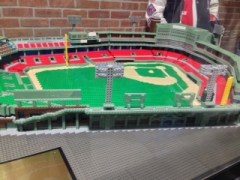
Lego Fenway

Game two of the series had the same muted bats throughout the entire game…until the end of course. If you had hung in there until the 8th and 9th inning, you were privileged to witness a most awesome come from behind win. It had it all…drama, tension, pressure and even more pressure. As each batter got up in the 8th, the pressure mounted. Then there was David Ortiz at the plate…bases loaded and two outs. He crushes one over the right field bull pen and clears the bases!  The stress and pressure mounts for the Tigers as the momentum shifts, the Sox are energized and the Tigers are wondering what just happened. Gomes hits a deep ground ball to the shortstop and the next thing we see is a throwing error that advances him to second! Maybe the shortstop was forcing his throw….hmmm. Next comes a wild pitch and Gomes jogs to third! The rest is history and we walk off with the win!

The events in the last two innings were so similar to things that happen when we golf, I couldn’t help but comment on it. We add pressure to ourselves and try to force shots in order to make up for missed shots on holes gone by. Not unlike what the shortstop did when trying to throw Gomes out at first. Instead, he “hit the ball in the water” or for him, threw a wild ball to first base. He should have held on to the ball, the runner would have stayed on first and he would have set up for a double play.  Instead, the wild throw sent the runner over to second…no more double play option. It’s no different that choosing the percentage shot.  Rather than try to send the ball flying through a narrow opening between two trees, punch the ball out into the fairway and set up a great “next shot” to the green. The wild pitch was another interesting event. When a pitcher tries to guide or place the ball to a certain spot, his release will be manufactured and it’s almost always going to result in a wild pitch. It’s no different that a golfer trying to “direct” his or her tee shot. The club face stays open, the ball starts somewhat straight then slices to the exact place you were hoping to avoid. If you trust your skill and swing with freedom and confidence, you’re very likely to have a successful shot rather than an errant shot.

The other observation was the energy shift for the Red Sox. After Ortiz cleared the bases, the bench went crazy as did the fans. Instant energy boost! Instant rush of confidence! Success!!! Don’t we feel that very same thing when we make a long putt or when we save par or even bogie? Success! Instant confidence boost! The Sox built on that confidence boost and won the game. You can take a page out of that book and build on the success you have on the course, wherever they may be.  It could be a simple putt or a straight drive or a chip that went as planned.  Unlike the ALCS, where it’s the best of seven games, the opportunities for golfers to be successful are endless! Why you ask? Well, every shot is a brand new shot unlike any shot we’ve had before…and of course that gives you the opportunity for making successful golf shots every time you play! Go Red Sox!!

Posted in Articles | Tagged , , , , , , , , , , , , | Leave a comment

The Parallels Of Golf And Wine

1st growthYou can find parallels to golf in almost everything you do. I gave a lesson earlier today that reminded me of a 2010 article from the Gloucester Daily Times written by Cathy Huyghe, wine aficionado, writer and yes golfer. Cathy and I met through the Boston University Wine Studies Program as we both attended and completed the advanced level certificate program. It was great fun and we learned tons about wine, wine production, wine regions and everything in between. Our paths crossed throughout the program and it lead to the idea of sharing the similarities of golf and wine. I thought I would share it with you today.

Enjoy! Oh….and Cheers!


May 25, 2010

Honing Tasting Skills And Finding Par For The Course

Tastes of our CapeCathy Huyghe

Gloucester resident Cathy MacPherson and I are in the same boat.

We both have professions that are a little unusual (golf for MacPherson, wine for me).

We are both enthusiastic participants in “side interests” that are similarly unusual (wine for MacPherson, golf for me).

And, when we’re talking with people who are new to our professional interests, we are often drawn into very similar conversations. They often start like this: “Golf/Wine is so challenging! I don’t even know where to start.”

Or they start like this: “Golf/Wine has its own language and I’m just a beginner. I don’t want to look silly.”

When I started in wine, those were my two main concerns, namely that I didn’t know where to start and I didn’t want to look silly. It turns out that when I started in golf, I had exactly the same concerns, namely not knowing where to start and not wanting to look silly.

But it wasn’t until I met MacPherson and asked her to teach me the game of golf that I understood the parallels between drinking wine and playing golf. MacPherson was way out in front of me on this; she’s been thinking about the wine/golf parallels for years.

Someone who loves wine just as much as she loves golf? That’s my kind of teacher. So we started lessons.

MacPherson is an LPGA professional who was voted by Golf for Women Magazine as one of the “Top 50 Teachers” in the country for eight consecutive years, by Golf Digest as “Best Teacher in the State” in 2004 and by Golf Magazine as a “Best Teacher in Region.” As a gifted teacher, MacPherson knows to speak to her students in a way they understand, to communicate key concepts through metaphors that are meaningful to the student.

For me, of course, that metaphor is wine. It started when MacPherson taught me to keep my head low and even through the swing; “Pretend there’s a shelf of Riedel glasses above your head. Look up too quickly and the glasses fall off and break.”

Another example was her explanation of lessening the spray pattern of my shots; “At first, your balls are all over the place, just like your palate is all over the place when you start tasting wine,” she said. “Keep practicing, though, and your spray pattern becomes narrower. Keep tasting, and soon you’ll be able to tell a Cabernet Sauvignon from a Merlot.”

The “keep practicing” idea is, in fact, central to resolving those two beginner’s concerns whether you’re talking about wine or golf — knowing where to start, and not looking silly. The key is to settle into a routine and do the same exact thing — keep practicing — every single time you taste wine or hit a golf ball. That routine is where you start, and practicing it often enough is what keeps you from looking silly.

MacPherson has developed a metaphorical scheme that details what to do before you taste or swing. The acronyms are the same — V.A.P.S.A. — and so is the idea, that is, to create a consistent method.

With golf, practicing the method consistently allows you to set the foundation to enable better shot making. With wine, practicing the method with each taste allows you to assess wines more consistently.

V.A.P.S.A. for Golf

Visual: Determine the target

Alignment: Set up parallel to the target line

Posture: Create a balanced, athletic position

Swing: The final product

Assess: How was it?

V.A.P.S.A. for Wine

Visual: Look at wine

Aroma: Smell the wine

Palate: Swirl the wine, taste it, judge its texture and body

Spit (if you are just tasting) or swallow: The final product

Assess: How was it?

Cathy Huyghe is a regular Times columnist. A resident of Manchester, she coordinates a website, 365daysofwine.com, covering food and wine throughout Greater Boston.

Posted in Articles | Tagged , , , , , , , , , , , , | Leave a comment

Had To Share This Article~Technology Multiplies the Fun Factor in Sports — Golf Goes Mobile!

When I bring in new technology, I always ask a few clients to give it a test run.  I look for honest feedback and whether they feel that it would improve their experience either before, during or after the lesson. This was the case when I asked client Susan Galer, Communications Director of SAP Global Communications,  to take a look at my latest technology. Susan is an avid golfer. She has been a client of mine for some time now and has experienced all of my technology over the years. She is a self proclaimed lover of data and the benefit it may offer to any experience, including golf.  When I asked Susan to take a look, I had no idea it would prompt her to write about it! She writes for SAP Business Trends and Forbes BrandVoice. You can also find Susan on twitter ~ @smgaler. Here is her article about my new App. Enjoy!

Technology Multiplies the Fun Factor in Sports — Golf Goes Mobile

Fans, teams, and athletes (professional or otherwise), are well aware that advanced technologies are revolutionizing the sports industry. Earlier this year at SAPPHIRE NOW, SAP’s largest annual customer event, Icovered some pretty interesting discussions between leaders from the National Football League (NFL)National Basketball Association (NBA), and the San Francisco 49ers football team. Along with athletic performance apparel and footwear manufacturer Under Armour, all are co-innovating with SAP on software solutions that use Big-Data, mobile, and cloud to bring fans closer to the action, improve player performance, and generate new revenue streams for teams.

The idea behind all this technology is very simple: the right information makes sports more fun—whether you’re watching the team, managing it, or playing on it. Based on my personal experiences on the golf course this season, I can tell you one thing, this stuff really works. I’ve been lucky to have as my golf proCathy MacPherson, one of the most gifted teachers I’ve ever had. MacPherson has long been at the forefront of technology. Her website is optimized for mobile devices and features a 24/7 on-line scheduling system for the convenience of her clients. She’s already one of the few pros in the region using the FlightScope X2, a Doppler radar system that lets you view the flight of your ball and arc of your swing in real-time. The video captures and stores all the data in 3D so you can see what you need to work on, as well as how you’ve improved over time. She also does video lessons using a mobile-based program that lets her draw on the screen, sending snapshots and video to clients instantly using her iPad or iPhone.

With the release of her new mobile app, now available on iTunes andAndroid, MacPherson is fully mobilized, taking advantage of the latest technology to meet the needs of her increasingly on-the-go clients. Here’s what she told me that sparked her decision to go mobile.

“I discovered a company that builds mobile apps when I was at the PGA trade show in Orlando last year, and decided that the mobile device platform was the way to go. People do everything on their mobile devices, including me, so it made sense to have an app of my own.”

As one of the beta users, I can report that the app couldn’t be easier. Booking lessons takes seconds from my iPhone—one click and I’m at the scheduler. But the best part of going mobile with any sport is the real-time information that lets you do things you couldn’t do before. This includes receiving real-time alerts on changeable New England weather conditions at Ferncroft Country Club, where MacPherson teaches. She can send important push notifications such as lesson cancellations due to the weather, new golf workshops, and links to her blog, “A Great Approach to a Better Game.”MacPherson credits the app will helping to give her blog greater reach in over 30 countries. Users can also connect directly with MacPherson on Facebook,LinkedIn, and Twitter.

Similar to other industries, MacPherson thinks the next technology frontier for golf instruction lies in wearables that seamlessly deliver personal performance information. Being analytical to the core, I say bring it on. Technology means data and that’s an alluring combination exactly suited to my style. As for results so far, nothing beats the convenience factor that mobile delivers. Less time spent on logistics translates to more fun time for golf. The real proof, though, is in my handicap which is actually several points lower since the season began in April. That’s the kind of fun factor every golfer can appreciate.

Follow me @smgaler

Posted in Articles | Tagged , , , , , , , , , , , , , | 1 Comment

The Best Comment Of The Solheim Cup Comes From The 17 Year Old Rookie

solheim

I Love watching the Solheim Cup.  Like the men’s counterpart, The Ryder Cup, it’s the ultimate team event for women’s golf.  It has an energy and a vibe all its own. Teamwork, camaraderie, cheering and more cheering is the theme of the weekend. It takes two years for the teams to formulate. The captains strategize and plan, make their “captain’s picks”, set the matches and then it’s game on! Three days of long drives, missed putts, balls in yucca plants, balls slithering into hazards, putts rolling just off the long and undulating greens and of course a brief and untimely lightning  bolt or two. In the end however, the putting was awesome on the Euro side. They made putt after putt after long and winding putt!  We all know golf is golf and some days, putts just fall in or balls heading straight for the woods bounce of trees and come to rest in the middle of the fairway. Of course there are the days when the opposite is true, but that is the game of golf.

So what is the best takeaway from this bi-annual event? I think it comes from a statement made by the 17-year-old rookie sensation Charley Hull.  What did she say when asked about nerves during her stellar play?   “I didn’t really feel that nervous, to be honest,” said Hull.   “Because this is how I always look at golf — I’m not going to die if I miss it. Just hit it, and find it, and hit it again.”

Just hit it, and find it, and hit it again. So simple and yet so true.  The next time you go out to play, channel the sage advise of the 17-year-old. You might enjoy your round in a way you’ve never enjoyed it before!

Posted in Articles | Tagged , , , , , , , , , , , , , , , , , | 2 Comments